
Listen to the full conversation below.
I almost mispronounced her name.
Not in the interview, thank God. Before it. I had been saying it in my head the wrong way for two weeks and somewhere between sending the calendar invite and pressing record on Google Meet, I thought to ask. She corrected me gently. Nana Darkoa Sekyiamah – “nah-nuh dahr-koh-uh seh-chee-ah-mah”. Said it once, clearly, and moved on. No big deal. That small moment told me a lot about who I was about to spend thirty minutes with.
I have been following Nana Darkoa’s work for a while now. Long enough to know that when I emailed her about our Twitter Space, I was doing something slightly terrifying. You do not just cold email the woman who wrote The Sex Lives of African Women and ask her to show up for you. But she said yes. And then she said she was not on Twitter anymore, her account had been suspended and we figured out another way.
That is how we ended up on Google Meet on a Sunday evening, me in Maryland, her somewhere managing mom duties and a calendar that she described, with total calm, as crazy for the rest of the month.
She was funny. That was the first thing. I had expected thoughtful and serious and she was both of those things, but she was also funny and direct and completely unbothered in a way that you only get from years of sitting with women and asking them questions nobody else would ask.
She did not set out to be a sex educator
In 2009, Nana Darkoa and a friend started a blog. Adventures from the Bedrooms of African Women. They wrote about their own experiences, kissing girls in boarding school, whether size matters, the full complicated texture of their sex lives, and they invited other women to do the same.
“I don’t think I started that journey thinking I was going to be on a journey of sex education,” she told me. “But that’s pretty much what happened.”
The blog is still running. She is no longer involved in it. But while she was, she kept noticing the same thing. The stories African women were telling each other in private were nothing like the stories being told about African women in public. Western media had a very specific image it was working from. Women who had experienced female genital mutilation and therefore had no access to pleasure. Women with a baby on the back and a pot on the head.
“I just felt like that is just one side of the story. There is so much more.”
So she decided to interview as many African women as possible and put them in a book. She spent five years doing it. She went to Sao Tome and asked her tour guide if he knew any women who might want to talk. She found a dominatrix in the UK through a friend’s neighbour. She got a Facebook message from a woman called Helen Banda who had opened up her marriage and had been waiting three months for Nana to see it because Nana was not active on Facebook.
“Every time I went to a new country, I would just find one person to interview. That was the way I did it.”
The thing that actually surprised her
I asked her what surprised her most across all those conversations. I expected her to say pleasure. I expected her to say joy. The ways African women find and protect their desire in spite of everything.
She said child sexual abuse.
“I think it surprised me on a visceral level as opposed to an intellectual level, because intellectually, I knew a lot of women had experienced abuse. But I was shocked at how many women had experienced child sexual abuse. And I am speaking as a survivor of child sexual abuse myself.”
She said it the way you say something you have said many times before, not carelessly, but without flinching. There was a pause after it. I did not fill it.
Fuck the body count
This is the part where I have to tell you that Nana Darkoa Sekyiamah said fuck the body count on record and I was barely keeping it together.
We had been talking about Nigerian Twitter. About how the same conversation keeps coming back in different shapes. How many people she has had interactions with. And is that number too many. And what does that make her. I told her I first saw that conversation when I joined Twitter in 2017, fresh out of secondary school. I am still seeing the same thing now.
She was not surprised. But she was clear.
“I don’t really think it matters how many people a woman has slept with. That for me makes no difference to who she is as a person. Whether we have had a hundred lovers or ten lovers, we are all entitled to respect and dignity.”
And then she brought up a study from Ghana. The Gender Centre. HIV and AIDS research. The finding: married women were among those most at risk. Not because they had many partners. Because they had one partner they could not say no to.
“These women would have probably had a body count of one, yet still catch a chronic illness. Because single women were better able to negotiate condom use.”
Body count culture does not protect anyone. It does not keep women safe. It just keeps women quiet and controllable and unable to negotiate the things that would actually keep them healthy. She has stopped counting. She does not see the point.
“Fuck the body count.”
I said it back to her. We were in agreement.
What silence has actually cost us
I told her something I do not tell many people. That until I was nineteen I could not say the word sex out loud. Could not say penis, could not say vagina. I had little names for everything, the way most of us did, and even those little names felt like something I should whisper.
She understood completely. She is a mother now. Her child is six.
“If you don’t actually know the correct names for the different parts of your body, how can you say when somebody touches those parts of your body in an inappropriate way?”
She has been teaching her child from the beginning. The correct names, no cutesy alternatives, no softening it into something more comfortable for the adults in the room. The child knows what their body is called. That, Nana said, is where sex education starts. Not with a big conversation. Not with a book. With a child who has language for themself.
“Just by knowing your own body, by knowing what your body looks like, I think it is part of how you grow into just having control over your own person.”
I thought about myself at six. I did not have that.
What she would say to a young woman who has no language for any of this
“Just take the time to educate yourself. Find the right books, find the right podcasts, find the right films, however you prefer to consume knowledge. The good thing is nowadays the knowledge is out there and it is accessible. You can find knowledge created by people who come from your own background and culture so that knowledge does not need to feel foreign to you.”
And then unlearn. Take time to separate what you actually want from what you were told you were supposed to want. Figure out for yourself what feels good, what feels pleasurable, what feels like yours.
The second book and the sex auntie
Before we finished, Nana reminded me she has a second book. Seeking Sexual Freedom: African Rites, Rituals and Sankofa in the Bedroom. She said it with a warmth that I recognised as the warmth of someone whose second child is not getting enough attention.
The book uses Sankofa, the Akan concept that means go back and take it, to revisit African rites and rituals from a feminist lens. She talked about puberty rites. She talked about the Baganda tradition of Ensonga za Ssenga, the paternal aunt (Ssenga) whose job is to educate her niece about womanhood. The sex auntie, basically. The woman in your family who will actually tell you things.
“Just imagine if we recreated puberty rights from a feminist lens, how radical that could be.”
I am imagining it. I am imagining what I would have known at fifteen if someone had sat me down and told me the truth about my body. Not the rules. The truth.
Nana Darkoa Sekyiamah has been trying to give us that truth for fifteen years. First through a blog, then a book, now a second book, and through conversations like this one that end with two women laughing on Google Meet at nine o’clock on a Sunday while her mom duty waits.
I could have talked to her for hours. She told me the rest of the month was crazy.
She is welcome back anytime.
By Treasure Affia | The Feminist Code x HerLore Magazine
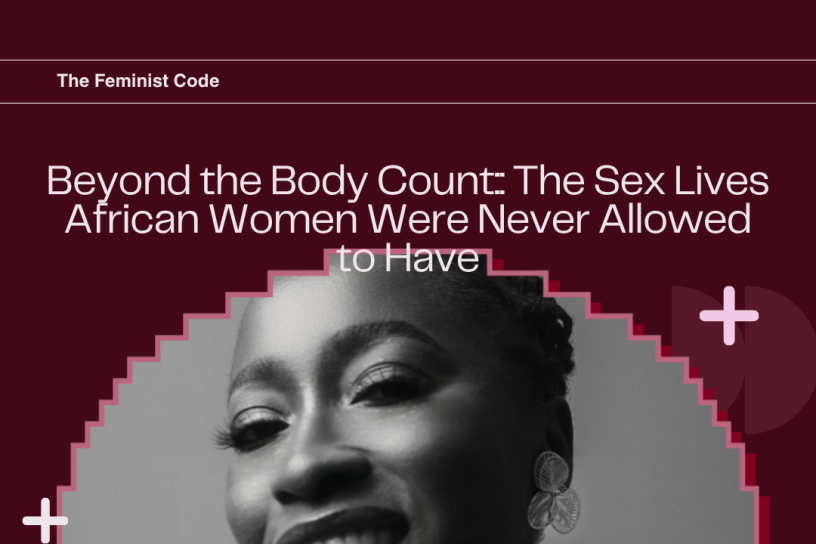
Beyond the Body Count: The Sex Lives of African Women Were Never Allowed to Have is a Twitter Space hosted by The Feminist Code and our Sexuality Education Institute. Tuesday July 14, 7PM WAT. Follow @thefeministcode on Twitter to tune in.
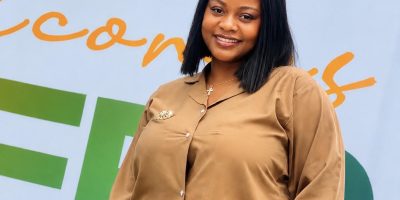
Nana Darkoa Sekyiamah is the author of The Sex Lives of African Women and Seeking Sexual Freedom, both available now.
