

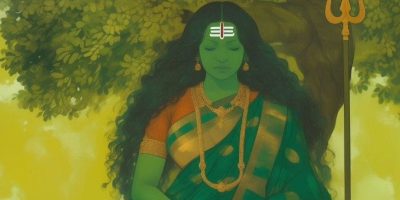

The kitchen smelled of cardamom and burnt milk when the goddess remembered she had forgotten to pray. Not forgotten in the holy way people mean when they speak of negligence and sin. Forgotten the way women forget small things after carrying too many larger ones. The rice simmering. The wet clothes still folded in a basin. The ache behind her eyes that arrives every month like a tax collector.
She stood barefoot on the cold tiles, stirring tea with the same hand that once painted into temple ceilings. Outside, traffic screamed itself toward morning. Inside, her daughter refused to wake up. “I’m tired,” the child said from beneath a blanket shaped like a defeated mountain. The goddess laughed softly because finally, someone in the house was telling the truth.
People imagine immortality as freedom from ordinary things. They have never been divine. They do not understand how exhausting it is to survive centuries of worship. To be asked for miracles by people who would not recognize you in a supermarket queue. To carry civilizations inside your body and still remember to buy onions.
Last week, a man on the bus explained her own mythology to her. “You know,” he said confidently, “she was known for her purity.” The goddess nodded while holding two plastic bags of tomatoes. Purity. What a strange thing to reduce a woman to after she has swallowed wars.
At home, she removed her earrings first. Then her anger. Then her bra. The holiest rituals are rarely written down. The sink was full again. There were messages unanswered. Rent approaching like weather. A bruise blooming on her thigh from walking into the corner of a table she kept meaning to move. Even goddesses collide with things they built themselves. Especially them.
She lit a candle not for worship but because the electricity had gone out again. The flame trembled. So did she. For a moment, in the dim apartment kitchen, she thought about all the versions of herself history had invented. The terrible one. The nurturing one. The untouched one. The seductive one. Men had always needed women to become symbols before they could forgive them for being people. But tonight she did not want reverence. She wanted silence. She wanted eight uninterrupted hours of sleep. She wanted someone else to decide what dinner should be.
Her daughter shuffled into the kitchen rubbing her eyes. “You look tired,” the child whispered. The goddess looked at her carefully, this small creature with milk-breath and stubborn hair and the unbearable softness of being loved completely. “I am,” she admitted. Then the kettle screamed. Then they both laughed. And somewhere, far away, a thousand devotees mistook the sound for thunder.
AUTHOR BIO
Sameera Kherdin is a writer and thinker based in Nairobi with a background in technology. Her previous work has been published by Mananas Magazine, Ukombozi Review, Drunken Lectures, Afrocritik and Qwanibok. Her debut published poem appeared in Issue 14 of Rafinkiofficial’s Just ImaZine Magazine. When she is not writing, she loves being outside in nature conquering a summit or swimming in a waterfall.
