



The giant pot of tripe soup at Odo’s roadside stall on the dusty edge of Dar es Salaam begins to boil by nine in the evening, but the secrets of that soup belong entirely to the afternoon. Hours before the first hungry night worker or stumbling drunkard arrives demanding a hot bowl of soup, the backyard of Odo’s house is a battlefield of flies, dust, and shouting. There is no romance or gentle sisterhood in how this business is prepared. Odo is a middle aged woman with hard hands, calloused by charcoal smoke and splattering hot oil. Every afternoon, her sharp, grating voice cuts through the heat, screaming at the young girl who helps her, whose name is Neema. Neema is only seventeen, but her eyes already carry the heavy weariness of someone who has long retired from hoping for a better life.
When Neema arrives in the morning, her body still aching and burning from the exhaustion of the previous night, she is not given even a second to rest. Odo knows exactly how to pinch pennies to squeeze out the maximum possible profit, and that means working Neema like a pack mule. In her outdoor kitchen, enclosed by rusted iron sheets caked in thick black soot, Odo stands pointing a rigid finger as Neema kneads the heavy chapati dough. Odo has many tricks for cutting costs that the midnight crowds never suspect. She orders excess water to be added to the flour to stretch the dough, even if it dilutes the rich taste of the wheat and turns the chapatis into cold, leathery sheets once they cool down. The tripe for the soup is washed in a hurry, dunked into the very same bucket of water used to clean the morning’s greasy dishes. To her, hygiene is a luxury she cannot afford; her only priority is the cold math of the coins that will slide into her apron when darkness falls. “Wash those intestines faster, girl!” Odo barks, pacing the small yard with her hands on her hips. “We aren’t here to display our faces; we are here to search for money. If you slag off, you will eat dust and hunger.”
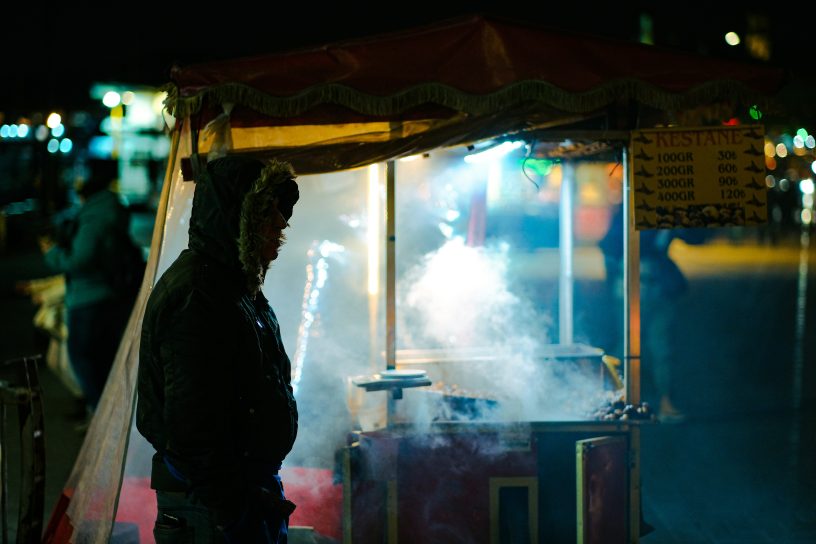
When the sun sets and the weak yellow streetlights flicker on, Odo transforms into the queen of her domain. Her stall, built from scrap wood and draped in heavy blue tarpaulin, becomes the beating heart of the night street. Thick charcoal smoke carrying the rich aroma of boiling beef broth, garlic, and onions fills the night air, drawing in passersby. Under the dim glow of a small solar lantern hanging from the corner of the tarpaulin, Odo stands before her flat iron skillet, flipping chapatis with practiced ease. The tears brought to her eyes by the rising smoke do not break her focus; she watches every corner of the street with sharp, predatory eyes. The roar of motorcycle taxis, the whine of mosquitoes hovering over the stagnant puddles near the stall, and the loud Singeli music blasting from a nearby bar all merge to form the soundtrack of her nocturnal survival.
The hardest part of Odo’s life is the competition. Just a few paces away stands the stall of another food vendor named Mama Asha. Their rivalry is silent but deeply toxic, heavy with unspoken malice that simmers just beneath the surface. Every time Odo sees a cluster of
customers drift toward Mama Asha’s side of the dirt road, her chest tightens with jealousy and pure rage. It is during these moments that Odo reaches for the unseen forces she believes keep her afloat in this city. Odo remembers clearly the secret journey she made six months ago to a remote village deep in Bagamoyo. She spent her entire two-week savings to pay a local
witchdoctor who promised her that her stall would never run out of crowds. She returned with a tiny charm wrapped in black cloth and bound with a leather cord. Before opening her stall each evening, Odo slips her hand beneath the wooden counter to touch that charm, whispering incantations for her rival’s customers to lose their way and come to her instead. On desperate nights, she sprinkles water mixed with a mysterious gray powder around her seating area, believing it binds the eyes of potential customers to the existence of her rival.
One midnight, when the ocean breeze carried nothing but the stifling heat of the city, a group of five rowdy, drunken young men arrived at Odo’s stall. They were shouting and pushing one another, demanding soup and chapatis with aggressive rowdiness. Neema, trembling from exhaustion and fear, rushed to serve them, placing the steaming bowls of soup before them. The young men ate greedily, laughing loudly and shouting obscenities into the night. When they finished, one of them pretended to go relieve himself by the drainage trench, and the other four quickly scattered into the darkness one after another without paying a single cent. When Neema realized the customers had vanished, she let out a small cry and tried to run after them, but the darkness had already swallowed them whole.
Odo, who was frying chapatis on the other side, turned like a wounded leopard. She did not run to look for the drunks; instead, she descended on Neema with a barrage of heavy insults that echoed down the entire street. “You foolish girl! What are those big eyes of yours for if you can’t watch customers running away with my money?” Odo shrieked, pointing a heavy iron spoon directly at Neema’s face. Neema stood frozen, tears streaming down her cheeks, mixing with her sweat and the black charcoal dust. She did not dare defend herself, knowing that doing so would only guarantee she would be stripped of the tiny wage she depended on at the end of the month.
Under this midnight reign, the young laborers who work for Odo endure the heaviest weight of her exploitation, driven by unwritten but ruthlessly enforced rules. As five in the morning approaches, and the pale gray light of dawn begins to paint the sky, the exhausted workers, their eyes bloodshot from lack of sleep, prepare for the final reckoning. This is when Odo’s true colors are laid bare without a shred of shame.
Odo sits heavily on her plastic chair, pulling open a wooden drawer filled with cash while staring at Neema, who stands meekly before her. “Today you lost the soup and chapatis of five people. That is my loss, and I do not run a charity here,” Odo says in a cold, detached voice. She also reminds Neema of a clay plate that was cracked during the dishwashing at two in the morning. Odo does some quick arithmetic in her head and deducts more than half of Neema’s small daily wage as compensation for the broken plate and the food of the runaway drunks.
Neema looks down at her palms, where Odo has placed the few remaining coins. The amount is not even enough to buy a packet of maize flour for her family, let alone cover the transport to carry the heavy pots back home. “Odo, how will I even get the motorcycle fare to carry these dishes back home?” Neema pleads in a low, trembling whisper. Odo looks at her with utter contempt and replies, “What are your legs for? Walk. When you get home, rest a little, but by
exactly ten in the morning, you must be awake to knead the next batch of dough. Don’t be late, or I will take back even these remaining coins.”
As the rest of the city fully wakes up and the sun begins to rise with burning intensity, clean and smart office workers make their way to work. Odo ties down her blue tarpaulin and locks her wooden cash box. There is no guilt in her heart, nor does she contemplate changing her ways toward Neema or her customers. To Odo, this is the raw, unadorned truth of the night shift. It is a world of sweat and blood, utilizing small cruelties to maintain your footing, and pressing down on those below you just to stay alive in a massive city that swallows the weak every single day
Read about the Author John Pius
