


Who is to blame when predators exploit ignorance? The victim or the systems that fail in educating them?
In Port Harcourt, a boy hides bruises from his partner because no one ever told him men can experience gender-based violence. In Kano, a girl is married off before she finishes school, before she even understands what consent means. These are not isolated incidents. They are the direct outcomes of the silence and stigma, the latest Draft African Charter on Family, Sovereignty and Religious and Cultural Values hopes to maintain.
Even in pop culture, we’re seeing how these gaps play out in real time. Recent online allegations involving Nirvana Nokwe, a South African actress, musician, model and media personality, and Bonko Khoza, a South African actor, have sparked widespread debate.
Nokwe has alleged sexual violation experience by fellow cast member Bonko Khoza during a scene on Showmax’s Red Ink. This raises concerns about pressure, boundaries, and the kind of dynamics that are often difficult to name in real time. These claims remain unproven, and the full context is not something the public can definitively settle.
But the public reaction has said a lot, with some quick to dismiss, others quick to defend and many unsure what exactly constitutes harm in situations that are not always physically violent. The confusion about consent, coercion and about what healthy relationships should look like doesn’t come from nowhere.
One woman, who asked not to be named, described the first time she encountered the phrase “coercive control” in a TFC workshop, she was 26. She said: “I had been calling it love for four years. I didn’t have another word.” She is not an outlier. Across TFC’s programs in Nigeria, Ghana, and Kenya, facilitators consistently report that participants arrive without language for the experiences they have already survived. Not because the experiences didn’t happen. Because no one gave them the vocabulary to name it.
The African Charter on the Protection of the Family, Sovereignty, and Religious and Cultural Values claims to defend African identity. It speaks of protecting families, resisting Western influence, and preserving tradition. At face value, that sounds necessary, most especially in a continent still navigating the long shadow of colonial interference.
But scratch the surface, and something doesn’t sit right.
The Draft African Charter on Family, Sovereignty and Values is not a spontaneous response to anything happening on the ground in African communities. It was developed across three inter-parliamentary conferences held in Entebbe, Uganda in 2023, 2024, and 2025, involving parliamentarians from 28 African countries, the African Bar Association, and a network called the Foundation for African Cultural Heritage, an organization with documented ties to US-based evangelical and social conservative movements that have long exported anti-LGBTQ+ and anti-reproductive rights campaigns into African policy spaces. Its closest predecessors include the 2023 Entebbe Declaration and the Geneva Consensus Declaration, a 2020 instrument championed by the Trump administration that similarly used sovereignty language to push back against abortion access and comprehensive sexuality education in the Global South. This is not a grassroots African values project but a coordinated, transnational policy campaign wearing African dress.
Why is knowledge being treated as a threat?
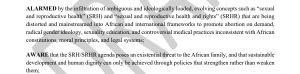
The charter draws clear criticism of foundational reproductive rights like abortion, under the veil of preventing ‘distortion’. It further promotes restriction of sexuality education, requiring parental gatekeeping, and banning foreign-funded programming, which actively undermines access to critical, life-saving information. More dangerously, it labels sexuality education and gender progressive work as “Western,” as though African communities have never had their own ways of understanding bodies, health, and relationships.
These claims blatantly ignore the role African women, queer people, and community knowledge holders have played in carrying and sharing knowledge about sexuality, care, and body autonomy. That knowledge is not imported. It is lived. It is inherited. It is African.
That dismissal of sexuality education as foreign, is not protecting culture, instead it is rewriting it. It is choosing which African voices count and attempting to silence the voices of those most affected.
The gender theory supported by the Sexuality Education Institute of The Feminist Code does not impose external frameworks. It builds from the existing knowledge within African communities, recognizing that these are not voids awaiting instruction, but dynamic environments containing established systems, cultural contexts, and lived realities. Through various instruments, its programming remains both culturally adaptive and directly accountable to the populations it serves
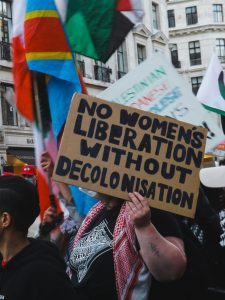
Yes, conversations about sovereignty, culture, and external control are valid in reference to decolonisation. African countries have every right to define their own policies, protect their institutions, and resist imposed frameworks. But sovereignty cannot be selective. It cannot claim to defend the people while denying them agency over their own bodies.
Because what does sovereignty really mean if a girl cannot choose to finish school before marriage?
What does it mean if a boy cannot name his abuse and abuser without shame? Sovereignty without body autonomy is not freedom. When young people are denied knowledge, they are denied the capacity to articulate harm.
Real self-determination is not about shutting people out. It is about bringing people in. It is about transparent, inclusive decision-making that centers those who live with the consequences: young people, women, survivors, and marginalized communities.
Anything less is just power protecting itself. TFC invites the youth to join in the concerted effort to advocate for policy and programmatic approaches that center community-defined knowledge and local accountability in sexuality education.
Because when young people are not given language, they cannot name harm. When they are not given knowledge, they cannot recognize danger. And when they are not informed, they are easier to control.
You can’t protect people by keeping them in the dark. You need to get that in your head.
Strong families don’t build on silence. They speak the truth. On discussions that can be uncomfortable but need to happen. On young people who are educated, aware, and empowered to navigate the world safely. Because at the end of the day the real threat is not what young people know. It is what they are never permitted to know.
And the fact is African identity has never been singular. It has always been layered and changing and full of the people in it. They brand sexual education as “cultural recolonization” in an effort to discredit African-led, community-based organizations such as TFC. It aims to make them guests in their own homes. Do you not see this? This is not by chance; it is intentional. It’s about control of narratives, control of bodies, control of who gets to define what Africa looks like. And that definition is currently being narrowed. You cannot say you want to protect African families and yet deny them the means to survive, thrive, and make informed choices.
That’s why sexuality education is not a threat to African families. It is what keeps them intact. It is what gives young people the language to name harm before it destroys them. It is what The Feminist Code has been building through the Sexuality Education Institute, through HerLore, through every workshop where someone finally gets a word for what happened to them.
The Charter will go to AU member states for ratification. That process is not finished. Civil society voices still have standing in it. If you believe that sovereignty must include the sovereignty of girls over their own bodies, of boys over their right to name abuse, of queer young people over their right to exist, then say so, loudly, and in the spaces where it counts.
Contributors: Oratile Mokgatle and Alushe Mupewa
