
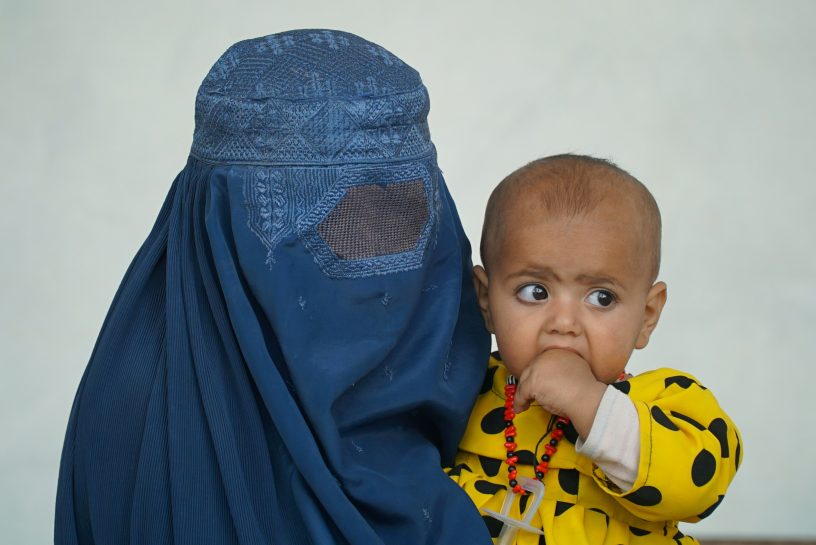

In 2026, Afghan women under Taliban rule continue to live in a reality where freedom is restricted and human rights are being systematically denied. Their existences are limited by bans on education, employment, and public participation. Girls are pulled out of classrooms, women are barred from most workplaces, and even the act of walking outside without a male guardian (mahram) becomes a negotiation with power. The blatant disregard for the human rights to education, freedom of movement and health beg the question of their value, if they depend on borders.
It is tempting to see this as a distant tragedy, confined to Afghanistan. The bleak reality is that the goal of the African Union’s draft Charter on the Protection of the Family, Sovereignty, and Religious and Cultural Values echoes similar sentiments of restriction cloaked in that very same language of tradition and sovereignty. It claims to protect African identity, yet in practice, it risks narrowing women’s freedoms by restricting sexuality education, undermining reproductive rights, and silencing community-based knowledge systems.
A UN article from May 2025 reports that Afghan women and girls have been systemically excluded from equal participation in society. This oppression is not just their burden; it is a global reminder of how fragile women’s freedoms remain. African women cannot claim full freedom while Afghan women are denied education. Moreover, Africans collectively cannot claim freedom while policies at home threaten to restrict their access to knowledge, healthcare, and autonomy.
Across Africa, women can vote, attend school, and participate in public life. Many countries claim outright that their population enjoys equal rights and opportunities. Yet these freedoms are conditional, often fragile, and easily revoked. Young girls are still flunking out of school due to high teenage pregnancy rates. Boys are still receiving rudimentary sexual education that leaves them believing myths and taboos instead of science. These are the direct outcomes of existing silence, stigma, and proposals like the draft Charter on the Protection of the Family, Sovereignty, and Religious and Cultural Values, that treat knowledge as a threat.
The aforementioned draft charter insists that sexuality education is “Western,” ignoring the fact that African communities have long carried their own systems of knowledge about bodies, health, and relationships. By labeling reproductive rights and gender-progressive work as foreign distortions, the charter positions their absence as the protection of African sovereignty. However, we have a clear, modern example of what this looks like in practice. Another UN article from August that same year, noted that Taliban authorities instructed private businesses and health clinics to refuse services to all women who were not accompanied by a mahram. Afghan women live this reality currently, and African people must recognise its shadow before it becomes ours.
Yes, Africa has every right to define its own policies and resist external imposition. But sovereignty cannot be selective. It cannot claim to defend people while denying them agency over their own bodies.What does sovereignty mean if women are still pressured into marriage as soon as they finish school? What does it mean if boys are still being taught the same silence that is detrimental to their mental health as men? What does it mean if couples cannot access reproductive healthcare without stigma?
The Taliban’s recent legal decrees have dismantled protections for Afghan women and girls by removing any minimum age requirement for marriage and severely restricting divorce rights. Under the new framework, guardians may arrange marriages for minors. This effectively legitimizes child marriage and strips girls of agency, while simultaneously making divorce nearly impossible if the husband refuses, even in cases of forced or underage unions.
The situation in Afghanistan shows us the danger of sovereignty without autonomy. Currently, over 78 percent of Afghan women are not in education, employment or training as a result of the restrictive edicts prohibiting women from pursuing higher or secondary education. The Taliban claims to protect Afghan identity, but in practice, it strips women of their human right to dignity. The AU risks walking a similar path of defending culture while silencing those who live within it.
These practices not only institutionalize systemic violence and deny girls access to education, but also limit their rights to autonomy, and justice. With schooling for girls banned beyond age 11, families increasingly push daughters into early marriages, a practice now reinforced by law. Together, these laws represent a profound regression in human rights and practices that perpetuate exploitation while silencing the voices of Afghan women and children.
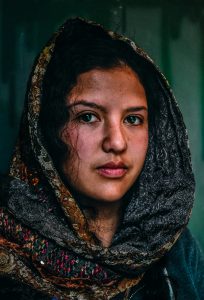
Feminism insists that freedom must be collective. It demands that sovereignty include women’s voices, that culture be a foundation for care rather than a shield for harm, and that policies center those most affected: young people, survivors, marginalized communities. Freedom, if it is to mean anything, must belong to every girl who wants to finish school, every boy who wants to name his abuse, every adult who wants to walk down the street without fear of persecution. The Feminist Code thus discourages the perception of Afghan women’s oppression as distant. Afghan women’s reality is a mirror. It shows us what happens when sovereignty is weaponized against women, when culture is used to silence people rather than empower them.
As Afghan women continue to resist, often at great personal risk, women all over the world must be reminded that silence is complicity. They continue to look for moments of solidarity and hope for a different future. In fact, reports from as recently as June reflect concerns for a group of 30 women arrested for violating decrees which include a requirement to wear a burka/chador with a face mask and a ban on perfume.
The Sexuality Education Institute of The Feminist Code offers a model of ways in which African feminists can contribute to solidarity. Its CARA Index builds from African knowledge systems, adapting programming to cultural contexts while remaining accountable to communities. It also serves as proof that African feminism is lived, inherited, and deeply rooted.
Organisations such as TFC continue to insist that freedom must be collective, that sovereignty must include body autonomy, and that culture must be reclaimed as a source of care. Our advocacy works to defend reproductive rights against such restrictive charters, mainly by spreading awareness. As an individual, you can also contribute to the effort by sharing this knowledge in order to equip others with language to name harm and recognize danger. Because no one is truly free till we are all free.
Contributors: Alushe Mupewa
